No products in the cart.
Uncategorized
Which Labs U.S. Employers Use for Hair Follicle Drug Tests
15
Sep
Sep
National diagnostic labs, specialized hair-testing labs, and mail-in kit vendors all run hair follicle drug tests in the U.S. Labcorp and Quest Diagnostics handle most employer-ordered testing through their nationwide collection networks, while Psychemedics operates as a specialized hair lab with its own patented extraction process. Which lab an employer uses usually comes down to network reach and how the results feed into their HR reporting system.
TL;DR:
- National labs like Labcorp and Quest have widespread collection sites, making it easier for applicants in remote areas to access testing.
- Specialized labs such as Psychemedics offer court-admissible results with proprietary methods, often serving larger employers or forensic cases.
- Hair testing detects drug use over a 90-day window, with results usually returned within three days for negative findings.
- Proper accreditation, confirmed confirmation methodology, and clear chain-of-custody paperwork are critical factors when evaluating a testing provider.
- No preparation product guarantees results; confirmation testing focuses on molecular analysis, so following collection instructions remains essential.
Table of Contents
Table of Contents
- Companies That Hair Test: Comparing Your Options
- How Does Hair Follicle Testing Actually Work?
- Who Actually Requires Hair Testing?
- How Do You Evaluate a Hair Testing Provider?
- What Preparation Products Can and Can’t Do
- A Straight Answer for Applicants and Employers
- Where Passhairdrugtest Fits If You’re Preparing Ahead of a Test
- Sources
- FAQ
Companies That Hair Test: Comparing Your Options
Most people searching for companies that hair test are trying to figure out one of two things: which lab their employer is likely using, or where to schedule a hair test on their own. The answer splits into three provider categories, and each one operates differently.
National diagnostic labs like Labcorp and Quest Diagnostics dominate employer-ordered testing because they already run massive networks of patient service centers across the country. An employer sets up an account, and applicants get routed to whichever collection site is closest to them. Quest markets its hair testing specifically as an employer solution with a 90-day detection window and expanded opiate panels for companies worried about longer-term drug history rather than a single weekend of use.
Specialized hair-testing labs, with Psychemedics as the clearest example, take a different approach. Psychemedics has run hair testing since 1986 and built its business around a patented extraction method it says produces court-admissible results. Some large employers and school districts contract directly with Psychemedics instead of routing samples through a general diagnostics company.
At-home and mail-in kits serve a smaller, different audience: parents checking on a teenager, or individuals who want to see their own results before a scheduled employer test. These kits typically don’t carry the same chain-of-custody documentation as an employer-ordered collection, so they’re not a substitute for compliance testing.
| Provider type | Panel coverage | Collection network | Typical turnaround | Best fit |
|---|---|---|---|---|
| National labs (Labcorp, Quest) | Standard 5-panel plus expanded opiates | Thousands of U.S. collection sites | 48–72 hours (negative) | Employer pre-employment programs |
| Specialized hair labs (Psychemedics) | Standard plus proprietary extraction panels | Fewer, often employer-specific sites | Similar 2–3 day range | Large employers, school programs, forensic use |
| Mail-in/at-home kits | Basic panels | Ship-to-home, no staffed collection | Varies by lab partner | Personal/parental checks, not compliance testing |
A remote applicant with no nearby collection site is often the deciding factor. National labs win there simply because they have more locations. A safety-sensitive employer that wants forensic-grade defensibility might lean toward a specialized lab instead, even if it means a longer drive for the applicant.
How Does Hair Follicle Testing Actually Work?
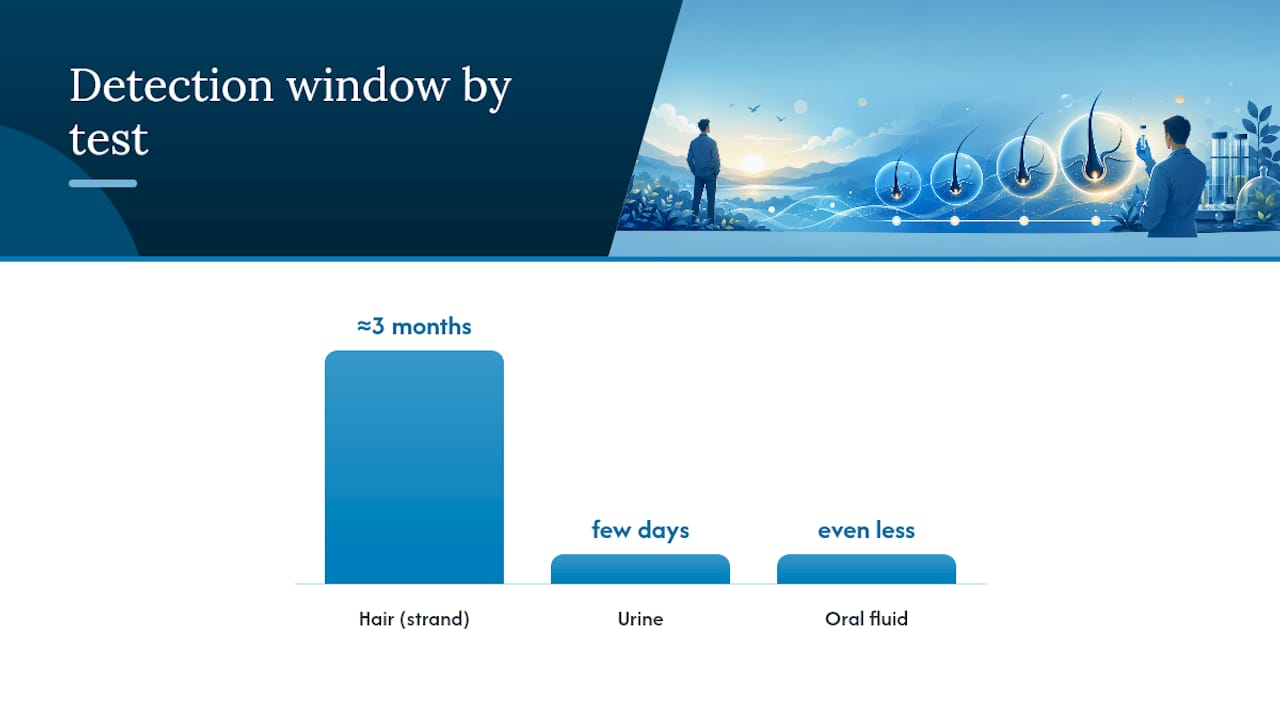
A hair test looks back much further than a urine or oral fluid test. Where urine typically covers a few days and oral fluid even less, hair captures roughly the last three months of drug exposure, since the strand grows and locks in a chemical timeline as it does.
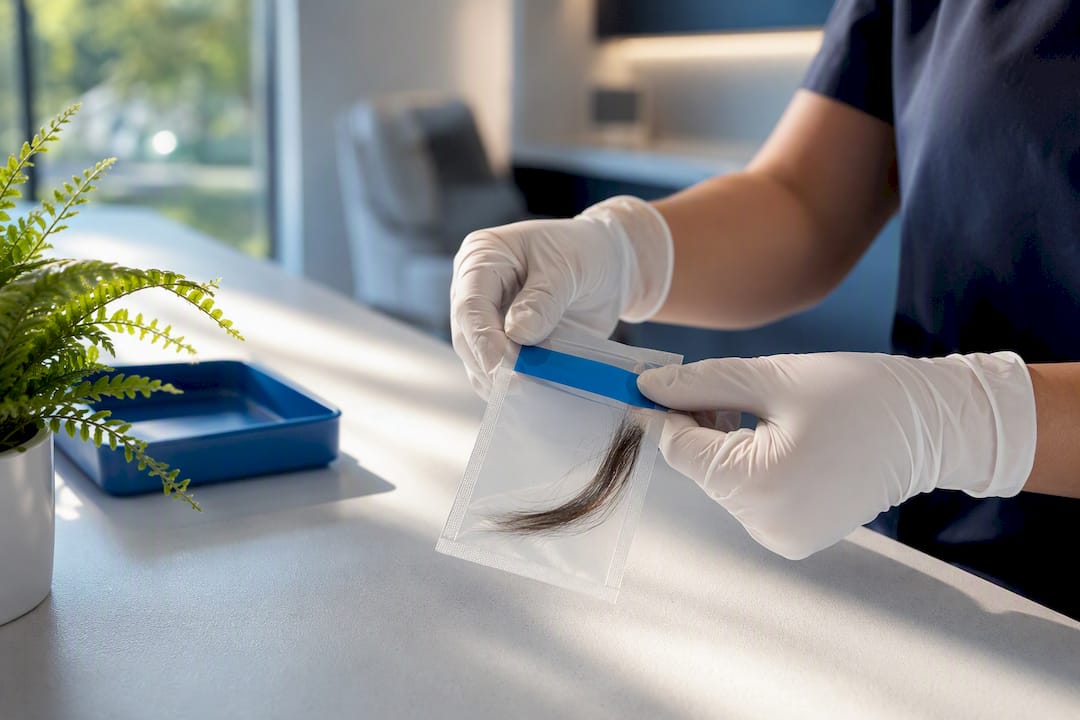
Collection itself is quick. A technician cuts about 100–120 strands close to the scalp, always in full view of the donor to prevent substitution or tampering. That sample gets sealed under chain-of-custody documentation before it ever leaves the room.
Pro Tip: Ask whether the collection is being done by the employer’s contracted lab or a third-party clinic. The paperwork trail differs, and you want to know who to call if a result gets disputed.
Once the sample reaches the lab, it goes through a two-step process:
- Initial immunoassay screening flags any presumptive positive.
- Confirmation testing by GC-MS or LC-MS verifies any flagged result at the molecular level.
Negative results typically come back within 48 to 72 hours of the lab receiving the sample. A presumptive positive takes longer, since confirmation testing adds roughly another 72 hours before anything gets reported to the employer.
Who Actually Requires Hair Testing?
Hair testing shows up most often in industries where a single bad decision can hurt someone else, not just the employee. Employers in these sectors lean on it heavily:
- Trucking and transportation, especially private carriers running their own screening programs
- Manufacturing plants with heavy machinery
- Construction, particularly for crane operators and equipment handlers
- Healthcare systems screening for controlled-substance access
- Utilities and other roles involving public safety
It’s worth separating federal mandates from voluntary policy here. DOT-regulated safety-sensitive positions require urine or oral fluid testing under federal rules, not hair. Hair testing is something private employers add voluntarily on top of, or instead of, those requirements when they want a longer look-back window than urine can offer.
Most pre-employment hair tests happen after a conditional job offer, a timing choice tied to avoiding ADA-related legal exposure. Some employers also run periodic or random hair screening for current employees, depending on internal policy.
How Do You Evaluate a Hair Testing Provider?
If you’re an HR professional setting up a program, or an applicant trying to figure out whether a provider is legitimate, run through this checklist before anything else:
- Confirm lab accreditation. Ask which accredited laboratory performs the actual testing, not just who collected the sample.
- Ask about confirmation methodology. A credible provider confirms presumptive positives with GC-MS or LC-MS, never immunoassay alone.
- Verify chain-of-custody documentation. You should be able to request a copy of the form showing who handled your sample and when.
- Check collection site availability. A national network matters if applicants live far from a single fixed location.
- Ask about turnaround time in writing. A vague answer like “usually pretty fast” is not a policy.
- Clarify who pays and who receives results. Employer-ordered tests route results to HR, not the applicant directly, in most programs.
Pro Tip: A provider that can’t name its confirmation lab or dodges questions about chain-of-custody paperwork is a red flag worth walking away from, whether you’re an applicant or an employer setting up a contract.
What Preparation Products Can and Can’t Do
Testing services and preparation products solve two different problems, and it helps to keep that distinction clear. Labs like Labcorp, Quest, and Psychemedics build their entire business around confirmation protocols designed to catch tampering and dilution, which is exactly why no shampoo or product should be marketed with an absolute guarantee against detection.
What the research does support is more modest: hair testing’s 90-day detection window is long, and confirmation testing adds a real layer of scrutiny beyond a simple screen. That’s the environment any preparation approach has to work within.
There are products on the market that include Macujo Aloe Rid Shampoo, Zydot Ultra Clean Shampoo, and the multi-step Macujo Method, associated with many years of experience in the detox-product industry. The company treats these as preparation products and educational guides, not as a substitute for understanding how a lab’s confirmation process actually works.
- Testing labs confirm results through molecular-level chemistry, not visual inspection.
- No product claim should promise a guaranteed outcome against a specific lab’s protocol.
- Following your employer’s or lab’s collection instructions matters regardless of what preparation steps you take beforehand.
A Straight Answer for Applicants and Employers
If there’s one thing worth prioritizing over everything else on this topic, it’s accreditation and paperwork. Ask who performs confirmation testing, get a copy of the chain-of-custody form, and find out who pays before test day arrives. Hair tests reach back roughly 90 days, so plan around that window rather than assuming recent abstinence covers you.
— MIchael
Where Passhairdrugtest Fits If You’re Preparing Ahead of a Test
Labcorp, Quest, and Psychemedics run the actual lab work, chain-of-custody paperwork, and confirmation testing. Passhairdrugtest is a different kind of resource entirely: it’s where you go if you want to understand your preparation options before test day, not to order a lab test.
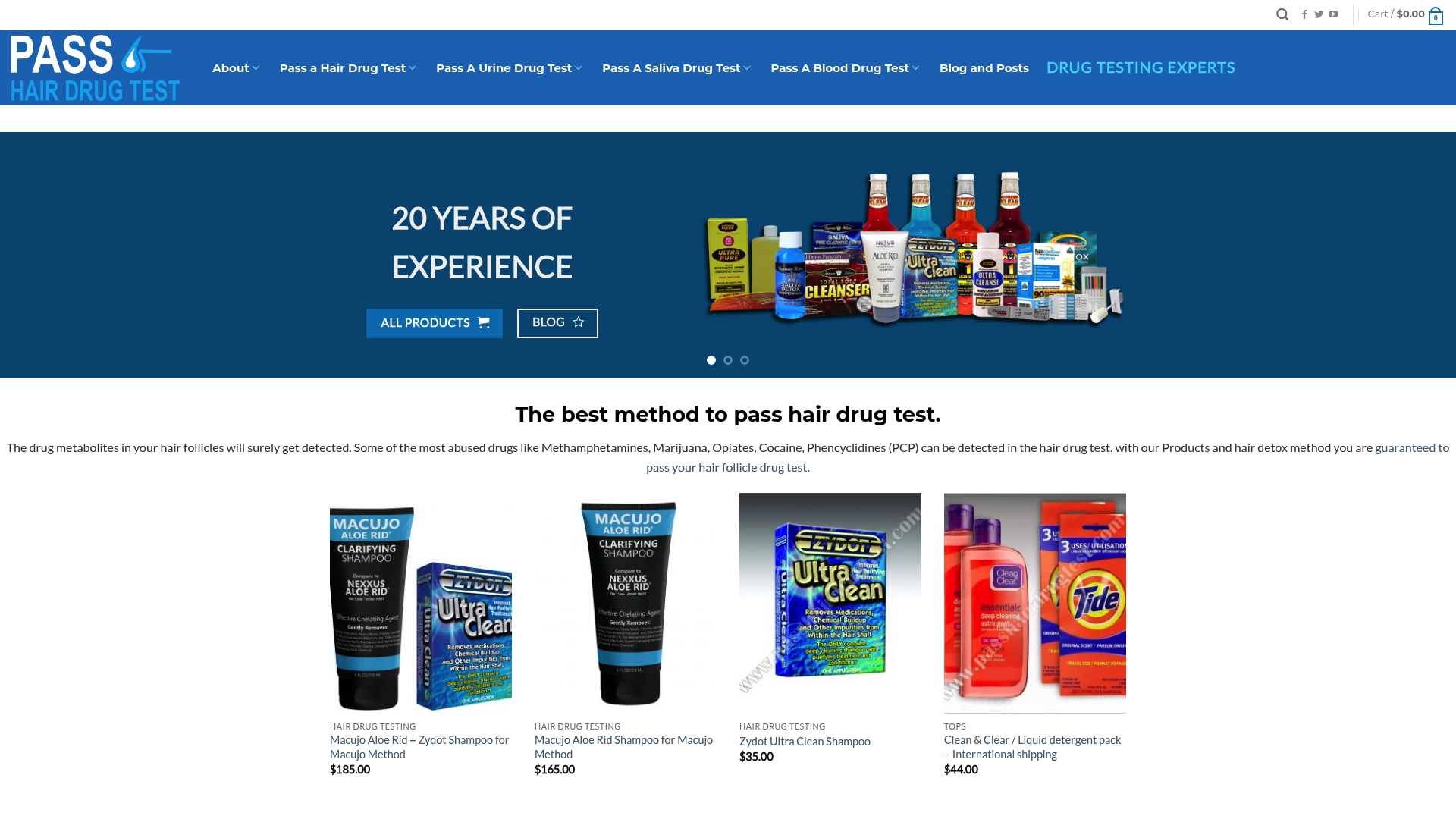
The product lineup centers on the Macujo Aloe Rid Shampoo, the Zydot Ultra Clean Shampoo, and the combined Macujo Method shampoo kit, backed by more than 20 years of the company’s experience in the detox-product space. Alongside the products, Passhairdrugtest publishes detailed guides on how hair follicle testing works so you understand what a lab is actually checking for before you decide how to prepare.
None of this replaces following your employer’s or lab’s own instructions, and no product outcome is guaranteed against every lab’s confirmation protocol. If you’re researching options ahead of a scheduled test, start with the hair follicle shampoo kit page to see what’s available and how the kit is structured.
Sources
- Hair Follicle Drug Testing: Process & Benefits | Labcorp
- Hair Drug Testing & Screening | Quest Diagnostics
- Psychemedics — Trusted hair drug testing since 1986
- Hair follicle drug test: what employers need to know | GoodHire
FAQ
Do Any Companies Do Hair Follicle Drug Tests?
Yes. Labcorp and Quest Diagnostics run hair testing through their national collection networks, and Psychemedics operates as a specialized hair-testing lab with its own extraction methodology.
How Much Does a Hair Test Cost?
Employer-ordered hair tests are typically paid for by the employer as part of a screening program, so applicants rarely see a direct bill. Independent or consumer-ordered hair tests generally run higher than a standard urine test because of the added lab confirmation work.
How Much Does a Hair Strand Test Cost?
Pricing for standalone hair strand testing varies by lab and panel size, and providers don’t publish a single fixed rate. It’s best to request a quote directly from the lab or collection site, since panel coverage and confirmation requirements affect the final price.
How Far Back Does a Hair Follicle Test Detect Drug Use?
Hair testing can detect drug use for up to 90 days, a much longer window than urine or oral fluid testing offers.
How Long Does It Take to Get Hair Test Results?
Negative results are typically available within 48 to 72 hours of the lab receiving the sample. A presumptive positive takes longer because confirmation testing adds roughly another 72 hours.
Recommended
- Hair Follicle Drug Test Information
- Pre-Employment Research: What Companies Do Hair Follicle Testing?
- The Science Behind the Hair Drug Test
- Pre-Employment Hair Test: What Job Applicants Need to Know
