No products in the cart.

Uncategorized
How Labs Use Phase II Metabolites to Confirm Drug Use in Hair
10
Sep
Sep
Yes. Drug metabolites are detectable in hair, and forensic labs now lean on that fact plus phase II metabolites, metabolite-to-drug (MD) ratios, and validated wash protocols to work out whether a positive result came from ingestion or from touching something contaminated. Mass spectrometry confirms every presumptive positive. The science is solid, but timing precision and legal interpretation still face challenges.
TL;DR:
- Hair tests detect drug metabolites after 5 to 7 days from ingestion, with hair growth and external contamination complicating timing and interpretation.
- Confirmatory mass spectrometry, thorough sample preparation, and phase II metabolite detection are crucial for differentiating ingestion from external contact.
- Melanin-rich, darker hair retains more drug compounds, and cosmetic treatments like bleaching or dyeing can significantly degrade detected levels.
- MD ratios and phase II metabolites help confirm ingestion, but their interpretation varies widely across drugs and individual metabolism.
- When results are ambiguous, reviewing wash protocols, testing methods, and considering reanalysis or toxicology consultations are essential steps.
Table of Contents
Table of Contents
- How Do Drug Metabolites Get Into Hair, and What’s the Detection Window?
- What Analytical Methods Do Labs Use to Confirm Results?
- Phase II Metabolites and MD Ratios: The Real Contamination Test
- What Changes the Numbers: Color, Chemistry, and Hair Type
- How Should You Read a Hair Drug Test Report?
- What Does Recent Research Say About Interpreting Hair Results?
- How Do Practitioners Handle an Ambiguous Result?
- Where PassHairDrugTest Fits Into This Picture
- Sources
How Do Drug Metabolites Get Into Hair, and What’s the Detection Window?
Once a substance enters the bloodstream, small amounts diffuse into the hair follicle and get locked into the growing shaft as it forms; sweat and sebum also add a secondary deposition route. That’s the biology labs count on. The complication: drug residue can also land on hair from external contact, like touching a contaminated surface or being near secondhand smoke, which is exactly why contamination versus ingestion is the central interpretive puzzle in this field.
Sample logistics matter as much as the biology. Head hair grows roughly half an inch a month, so a standard 1.5 inch sample represents about 90 days of history, and labs typically need around 100 milligrams, or 90 to 120 strands, cut close to the scalp.
A few numbers explain why timing gets confusing for people expecting instant results:
- Metabolites take about 5 to 7 days to become detectable in the visible hair shaft after use, because the follicle sits under the skin and the segment that captured the drug hasn’t grown out yet.
- That lag is also why the term “hair follicle test” is technically a misnomer. Labs test the shaft, not the follicle itself.
- Collection close to the scalp matters because the newest growth holds the most recent exposure history.
If you’re trying to map a specific date of use against a specific segment of hair, that 5 to 7 day gap is the detail most people miss entirely.
What Analytical Methods Do Labs Use to Confirm Results?
Every credible hair test runs on a two-stage workflow, and skipping either stage is what turns a lab report into a legal liability. Here’s the sequence:
- Immunoassay screening. A fast, relatively cheap test flags samples that might be positive. It’s a filter, not a verdict.
- Decontamination and preparation. Before any extraction happens, the sample goes through a validated wash to strip surface contamination, then gets segmented and pulverized or digested so trapped compounds can be pulled out. The Society of Hair Testing (SoHT) consensus guidance treats this step as non-negotiable.
- Confirmatory testing via GC-MS or LC-MS/MS. Every presumptive positive gets confirmed by mass spectrometry before it’s reported as an actual result.
The prep stage carries hidden risk. Certain solvents and acidic or alkaline conditions can hydrolyze labile compounds like cocaine or heroin metabolites during extraction, either destroying evidence that was really there or, worse, generating breakdown products that look like something else. That’s why the SoHT guidance is specific about validated extraction methods, not just any solvent that happens to pull drugs out of keratin.
Screening comes back quickly. Confirmation takes longer, but it’s the only version of the result that holds up in court or in a formal employment dispute.
Phase II Metabolites and MD Ratios: The Real Contamination Test
The single best clue for separating “this person used the drug” from “this person’s hair touched the drug” is whether the sample contains phase II metabolites. These are conjugated compounds your liver produces during actual metabolism. They generally don’t form from surface contact, so finding them is stronger evidence of ingestion than finding the parent drug alone.
NIJ-funded research has demonstrated that conjugated phase II metabolites can be measured at usable levels in hair, and the researchers specifically optimized their extraction methods to avoid accidentally creating those metabolites during processing, which would have muddied the whole point.
Labs also use metabolite-to-drug (MD) ratios as a secondary signal. The math sounds clean but the reality is messy:
- MD ratios vary enormously by compound, by individual metabolism, and by hair type.
- A systematic review of 41 pharmaceuticals across 94 studies found that many drugs show median MD ratios below 1, meaning the parent compound often outweighs its metabolite in hair, not the other way around.
- There’s no single universal cutoff that works across every substance.
Combining wash-water results with shaft concentrations still gives the strongest interpretation. If wash water comes back clean but the shaft is positive, and phase II metabolites show up, that pattern points toward ingestion rather than contact.
What Changes the Numbers: Color, Chemistry, and Hair Type
Not everyone’s hair holds drugs the same way, and this is where a lot of people get blindsided by a result that seems inconsistent with what they know about their own use.
Melanin is a magnet for many lipophilic and basic drug compounds, so darker, more pigmented hair tends to accumulate higher concentrations than lighter hair exposed to the same amount of a substance. That single fact has fueled real debate about bias in interpretation, and it’s part of why responsible labs document hair color and treatment history alongside the result rather than reporting a bare number.
Cosmetic chemistry also strips the evidence. Bleach, dye, perm treatments, and heavy UV exposure all degrade drug and metabolite concentrations in hair, sometimes enough to push a genuine positive below a lab’s cutoff.
- Chronic, repeated use shows up more reliably than a single isolated event, since hair testing is built to capture patterns of exposure rather than one-off timing.
- Body hair (chest, arm, leg) grows on a different cycle than head hair and can reflect a wider or less precise timeframe, so results from body hair need more cautious interpretation.
- Always disclose recent cosmetic treatments to the lab collecting the sample. It changes how the result should be read.
Pro Tip: If you’ve recently bleached or permed your hair, tell the collector before the sample is cut. It won’t erase a genuine positive, but it gives the lab context to interpret a lower-than-expected concentration correctly instead of assuming it means less exposure than actually happened.
How Should You Read a Hair Drug Test Report?
A screening positive and a confirmed positive are not the same statement, and conflating them is one of the most common misunderstandings people bring to a dispute. Only the confirmatory mass spectrometry result should ever be treated as reportable evidence of use.
Cutoffs and limits of quantitation (LOQs) exist because labs need a threshold above background noise, but a concentration number by itself doesn’t tell you the dose someone took or exactly when they took it. Hair testing is built to reveal patterns of exposure, not precise pharmacology.
If a result seems wrong or the stakes are high, here’s a practical sequence:
- Request the wash-water results, not just the shaft concentration, to see if contamination was ruled out.
- Ask specifically whether MD ratios were calculated and whether phase II metabolites were part of the testing panel.
- Confirm which instrumentation and confirmation method were used, and request the full chain-of-custody documentation.
- If the result still seems inconsistent with known history, pursue reanalysis or an independent toxicology consultation before accepting the report as final.
What Does Recent Research Say About Interpreting Hair Results?
The interpretive standard for this field has moved noticeably in the last few years, largely because of two converging efforts.
- NIJ-funded work has shown that phase II conjugated metabolites are measurable and genuinely useful for separating ingestion from surface contamination, since these compounds rarely form outside the body.
- The SoHT consensus document locks in validated decontamination, pulverization for low-level analytes, and mandatory mass-spectrometry confirmation as the accepted baseline for defensible testing.
- The systematic review of MD ratios confirms these ratios add real interpretive value, but only when read against drug-specific reference data, not a fixed universal number.
Taken together, these three sources describe a field that’s gotten more rigorous, not less, about proving what a positive result actually means.
How Do Practitioners Handle an Ambiguous Result?
When a result doesn’t add up, ask the lab for its wash protocol, instrumentation, and whether phase II metabolites or MD ratios were part of the workup. Weigh a secondary matrix like urine or oral fluid if recent use timing matters. When a job or legal outcome is on the line, get a formal toxicology review before accepting the report at face value.
— MIchael
Where PassHairDrugTest Fits Into This Picture
Given everything above, here’s the honest framing: consumer hair-cleansing products, including detox shampoos and multi-step kits, are marketed for people preparing ahead of a hair test, but their real-world effectiveness has limits once a lab is running mass-spectrometry confirmation and checking wash-versus-shaft data.
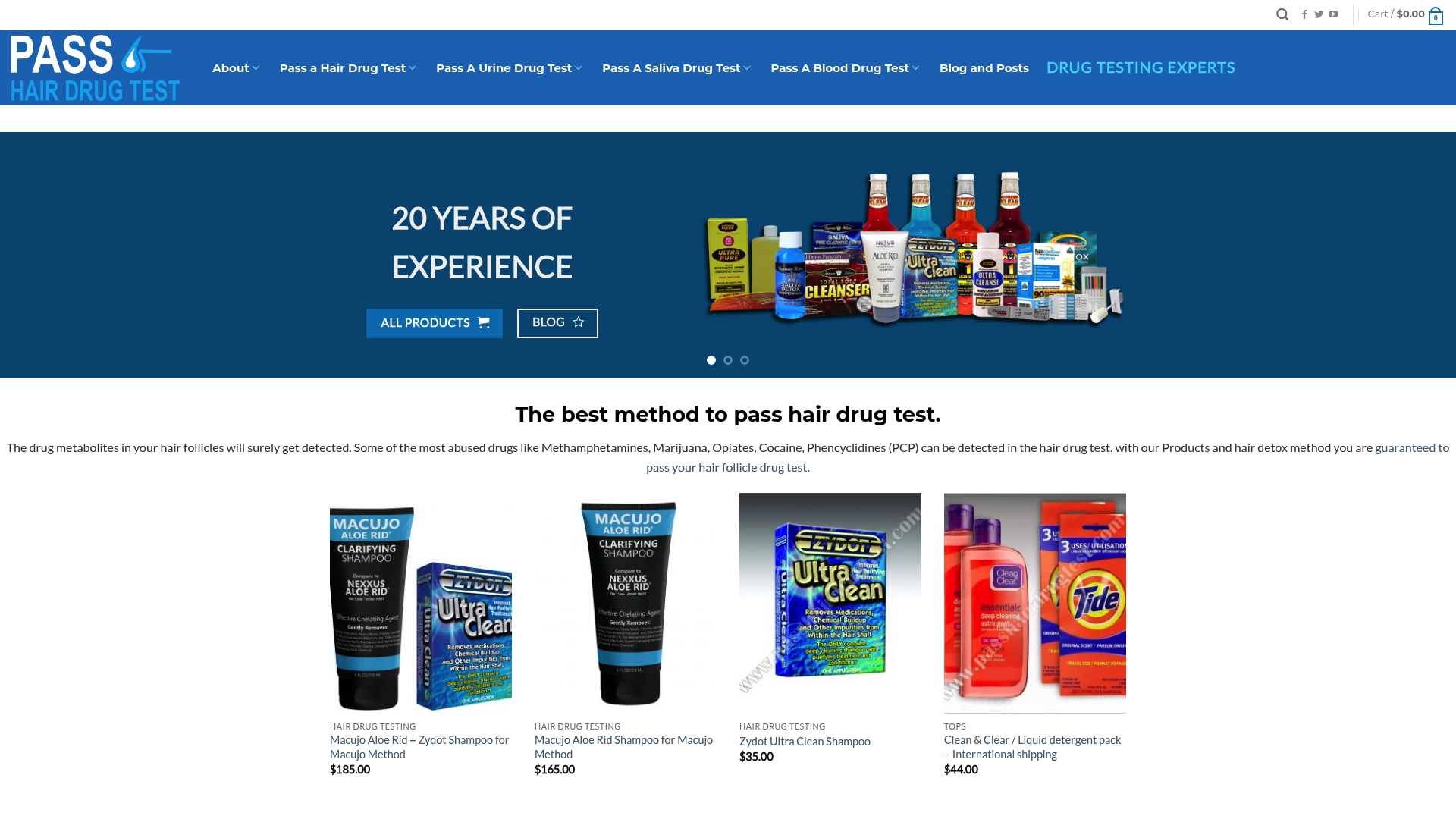
That’s exactly why detailed product and method guides are provided instead of just selling a bottle and walking away. If you want to understand what a shampoo protocol can and can’t realistically change, start with the comparison between detox and clarifying formulas or read through the Mike’s Macujo Method breakdown, which walks through the multi-step approach in detail. Before you rely on any product timeline, confirm your test date and your employer’s or lab’s specific policy, since those details change what actually matters. Browse the full product lineup to compare options before you decide what fits your situation.
Sources
- Detecting Drugs in Hair: Is It Drug Use or Environmental Contamination? | NIJ
- Consensus document on hair testing (SoHT) 2021
- A Systematic Review of Metabolite-to-Drug Ratios of Pharmaceuticals in Hair for Forensic Investigations
- Hair Follicle Drug Testing: Process & Benefits | Labcorp
Recommended
- Body Hair vs Head Hair: What Drug Test Labs Really Use
- Long Hair Drug Test: What Labs Actually Measure
- LSD Hair Test: Forensic Reliability and Interpretive Limits
- The Science Behind the Hair Drug Test
