No products in the cart.
Uncategorized
Safe Hair Detox Methods Before a Hair Drug Test
17
Nov
Nov
The safest hair detox before a hair follicle test is a controlled one: regular gentle washing, a purpose-built cleansing product used exactly as directed, and no harsh home mixtures that can leave your scalp raw and your hair brittle. We sell the products built for this job, including Macujo Aloe Rid Shampoo, Zydot Ultra Clean Shampoo and the multi-step Mike’s Macujo Method, and this guide shows how to use a safe approach from the first day.
Table of Contents
TL;DR
- “Safe” means no scalp burns, no brittle hair and no guesswork: choose a product made for hair test preparation and follow its directions.
- Skip the DIY mixes that strip hair aggressively. Vinegar-and-baking-soda rinses and stacked clarifying washes are built for buildup, not for test preparation.
- A peer-reviewed 2022 study found a Zydot shampoo lowered mean THC levels in hair samples by 52%, so a purpose-built shampoo is a reasonable first move.
- Stop any product that itches, burns or stings, and get medical help for a rash, hives or trouble breathing.
- Start early, keep notes on what you use, and ask us by phone if you are unsure about a step.
Table of Contents
- What “safe” means when a hair test is coming
- The baseline: a clean, healthy routine
- Home “detox” methods that cause problems
- What research says about shampoo-style treatments
- Purpose-built options that fit a safe plan
- A safe step-by-step routine
- When to stop and when to get medical help
- What the hair test and the rules look like
- Ready to build your routine
- Perspective
- FAQ
- Sources
What “safe” means when a hair test is coming
Most pages that rank for “hair detox” are about shine, scalp buildup and healthier strands. That is a different goal from yours. You have a hair follicle test on the calendar, probably for a job offer or a current employer, and you want to cleanse your hair without harming it.
For you, a safe method has three qualities:
- It is gentle on your scalp. Your scalp is skin. A product that burns it, or a routine that dries it out until it flakes, is not a good plan.
- It is repeatable and documented. You know what you used, how long you left it on and how often. Improvised mixtures change from one batch to the next.
- It does not damage the hair you need. The hair is the sample. Hair that is snapped, over-bleached or fried is a worse starting point than healthy hair.
That is the lens for everything below.
The baseline: a clean, healthy routine
Before any specialty product, set up a sound everyday routine. The CDC’s hair and scalp hygiene guidance recommends washing hair regularly, choosing a shampoo and conditioner suited to your hair type, using a scalp exfoliator to help break up buildup, not sharing brushes or combs, and brushing regularly to prevent tangles and help break apart buildup.
Washing matters on its own. A 2023 review of sample manipulation in testing notes that normal daily washing already causes some washout of substances from hair. Ordinary washing is no substitute for a dedicated cleansing step, but it does mean a consistent washing routine is part of the picture rather than something to abandon.
A simple baseline looks like this:
- Wash on your normal schedule with a shampoo that suits your hair type.
- Condition the lengths, not the scalp, if your scalp is oily.
- Use a clean brush, and do not borrow anyone else’s.
- Keep heat styling light so your hair stays strong.
Home “detox” methods that cause problems
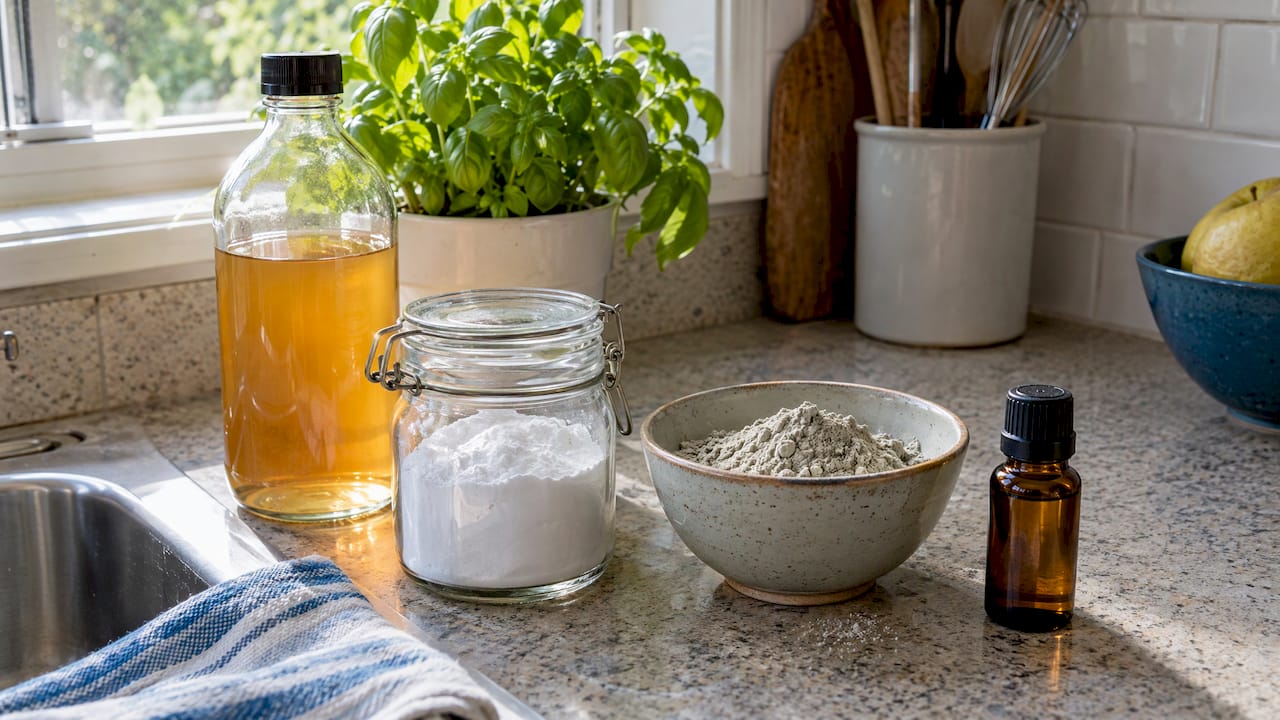
Search for “hair detox” and you will find apple cider vinegar rinses, baking soda pastes, bentonite clay, essential oils and “7-day” plans. They are written for people who want less product buildup. They were not designed for hair drug test preparation, and several of them are hard on skin and hair.
Harsh surfactants and overwashing
DermNet’s guide to shampoos explains that overwashing and harsh surfactants (the cleansing agents in shampoo) can strip the skin’s natural oil film, leaving the scalp dry and prone to irritation. It also says sodium lauryl sulphate may be more irritating than sodium laureth sulphate, and that clarifying shampoos are recommended weekly rather than daily.
That is the key lesson for anyone tempted to scrub with a clarifying shampoo every day for two weeks. You are likely to end up with an irritated scalp and tired hair, not a better-prepared sample.
Baking soda, vinegar and kitchen mixtures
These recipes are inconsistent. Strength depends on how much you mix, how long you leave it on and how your scalp reacts. We do not recommend building a hair test plan around them. If your goal is a cleaner hair sample, a product with printed directions is simpler and easier to control.
Bleaching and dyeing
The lab-science side of this is real: the Society of Hair Testing’s 2022 consensus states that concentrations in hair can be affected by bleaching, dyeing, perming, straightening and UV exposure. But chemical processing is also one of the easiest ways to damage hair and burn skin. If you are weighing it, read our page on how bleach and dye change hair drug tests first, and do not do it at home with a box kit you have never used.
What research says about shampoo-style treatments
You should know what the published science shows, because it explains why a purpose-built approach is the sensible one.
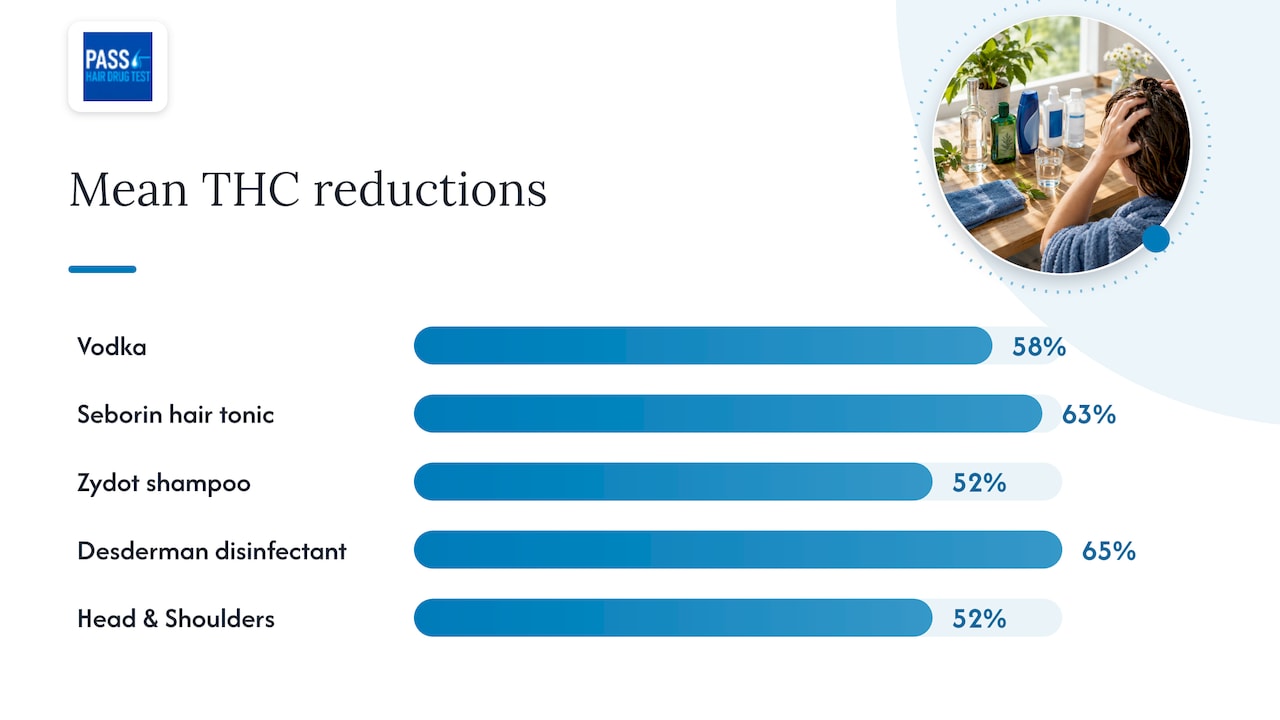
In a 2022 peer-reviewed study in PMC, Bertges and colleagues treated 54 THC-positive hair samples with commercially available products. Mean THC reductions were:
| Treatment | Mean THC reduction |
|---|---|
| Vodka | 58% |
| Seborin hair tonic | 63% |
| Zydot shampoo | 52% |
| Desderman disinfectant | 65% |
| Head & Shoulders shampoo | 52% |
In 14 of the 54 cases, treatment brought concentrations below 0.02 ng/mg (nanograms of THC per milligram of hair), which would have been reported as negative under the cutoff the study discussed for planned German guidelines.
Three things to take from this:
- Cleansing changes what a lab measures. Washing hair with a shampoo is not cosmetic when it comes to THC concentrations.
- Results vary from sample to sample. Your hair, your history and your use pattern are your own, and the study results are averages. We cannot promise an outcome for any individual.
- Reading the label and following directions matters. The more consistent your process, the better.
It also shows that products already on the shelf, from vodka to dandruff shampoo, are not a safe replacement for a method designed for the job. Vodka and disinfectants are not things you want to repeatedly put on your scalp.
Purpose-built options that fit a safe plan
A product designed for hair test preparation comes with directions, a defined process and support. That is what makes it safer than an improvised mixture. Our hair cleansing range centers on three options.
Macujo Aloe Rid Shampoo
A detox shampoo made for people preparing for a hair follicle test. It is one of our core hair products, and it is the simplest place to start if you want a single-product routine. Our guide to how to use detox shampoo walks through the application.
Zydot Ultra Clean Shampoo
Another of our core hair products. It is the same Zydot brand of shampoo that appears in the 2022 study above, where it produced a mean THC reduction of 52% across the tested samples. If you are comparing shampoos, our best hair detox shampoo page lines up the options.
Mike’s Macujo Method
This is our multi-step method, for people who want a full routine rather than a single wash. It is a proprietary process that we have sold alongside detailed instructions and support materials, and it is designed for both light and heavy users. Because it is a defined sequence, you are not inventing steps, which is what makes it a controlled approach.
If you are unsure which of these fits your situation, our page on whether detox shampoos work for hair follicle tests covers the question, and we have a guide to detox versus clarifying shampoo for anyone who has been using a regular clarifying shampoo and wonders whether it is the same thing.
A safe step-by-step routine
Here is the order we recommend working in.
- Count your days. Give yourself as much time as possible. Rushing leads to doubling up on products, and that is how scalps get irritated.
- Stop the harsh extras. Put away the baking soda, the vinegar experiments and any daily clarifying wash. Keep to a gentle shampoo and conditioner for ordinary washing, as the CDC guidance above describes.
- Choose one approach. Pick a shampoo or the Method and stay with it. Mixing several products at once makes it hard to tell what is irritating you. Our products page shows what is available.
- Check the product before you open it. Shelf life counts. Our seven checks on detox shampoo expiration is a quick list to run through.
- Follow the directions exactly. Do not leave a product on longer than stated or repeat it more often than written. More is not safer. If you are unsure of a step, call us: we offer unlimited phone support.
- Rinse thoroughly and condition gently. Leftover product on the scalp is one of the common causes of itching.
- Hold off on new chemical treatments. Avoid a fresh dye, bleach or perm in the days around your test unless you have a specific plan for it.
- Watch your scalp. If something stings, stop. More on that below.
For a full walkthrough of the process in one place, see our guide to how to pass a hair drug test with shampoo.
When to stop and when to get medical help
Safe also means knowing when to quit. The Mayo Clinic’s advice on dandruff shampoo is a useful rule of thumb for any shampoo: stop using one that causes itching, burning or stinging. Get immediate medical help for an allergic reaction such as a rash, hives or trouble breathing. If a scalp problem has not improved after a few weeks of treatment, see a healthcare professional or a skin specialist.
If you already have a scalp condition such as psoriasis, atopic dermatitis or seborrheic dermatitis, talk to a dermatologist before you start anything new. DermNet’s shampoo guide lists these as conditions that overwashing and harsh surfactants can worsen.
What the hair test and the rules look like
It helps to know what you are walking into.
A hair test analyzes a small sample of hair cut close to the scalp. Labs wash the sample before analysis. The Society of Hair Testing’s consensus says the washing step serves to remove hair care products, sweat, sebum, surface material and external contamination, and that any wash protocol requires laboratory validation. In plain terms, labs have their own cleaning protocol, and it differs from lab to lab.
The same consensus notes that natural hair color and type, growth rates and cycles, and topical, chemical and physical treatments all influence how compounds are incorporated and kept in hair. That is why two people with the same habits can get different results, and why we never promise a particular outcome.
On the regulatory side, the 2015 FAST Act required the federal government to develop Mandatory Guidelines for hair testing. According to SAMHSA’s June 2023 advisory board minutes, the proposed guidelines were published in the Federal Register on September 10, 2020, drew over 700 comments from 213 commenters, and were under review by the Office of Management and Budget with a final release anticipated at that time. The same minutes say the federal Drug-Free Workplace Program covers about 14 million employees and conducts about 7 million tests a year. Your employer’s own policy and testing lab are what apply to you, so confirm the details with the company that ordered your test.
If you want more background on THC specifically, our page on THC in hair explains what U.S. cannabis users should know, and the page on detecting detox shampoo in hair covers what labs look at.
Ready to build your routine
If you have a hair follicle test coming, our hair products are the place to begin. Macujo Aloe Rid Shampoo, Zydot Ultra Clean Shampoo and Mike’s Macujo Method are all available from our hair drug testing products page, and we state that we have more than 20 years of experience in the drug-testing and detox-product industry. Detailed instructions and unlimited phone support come with the process, so you are not left guessing.
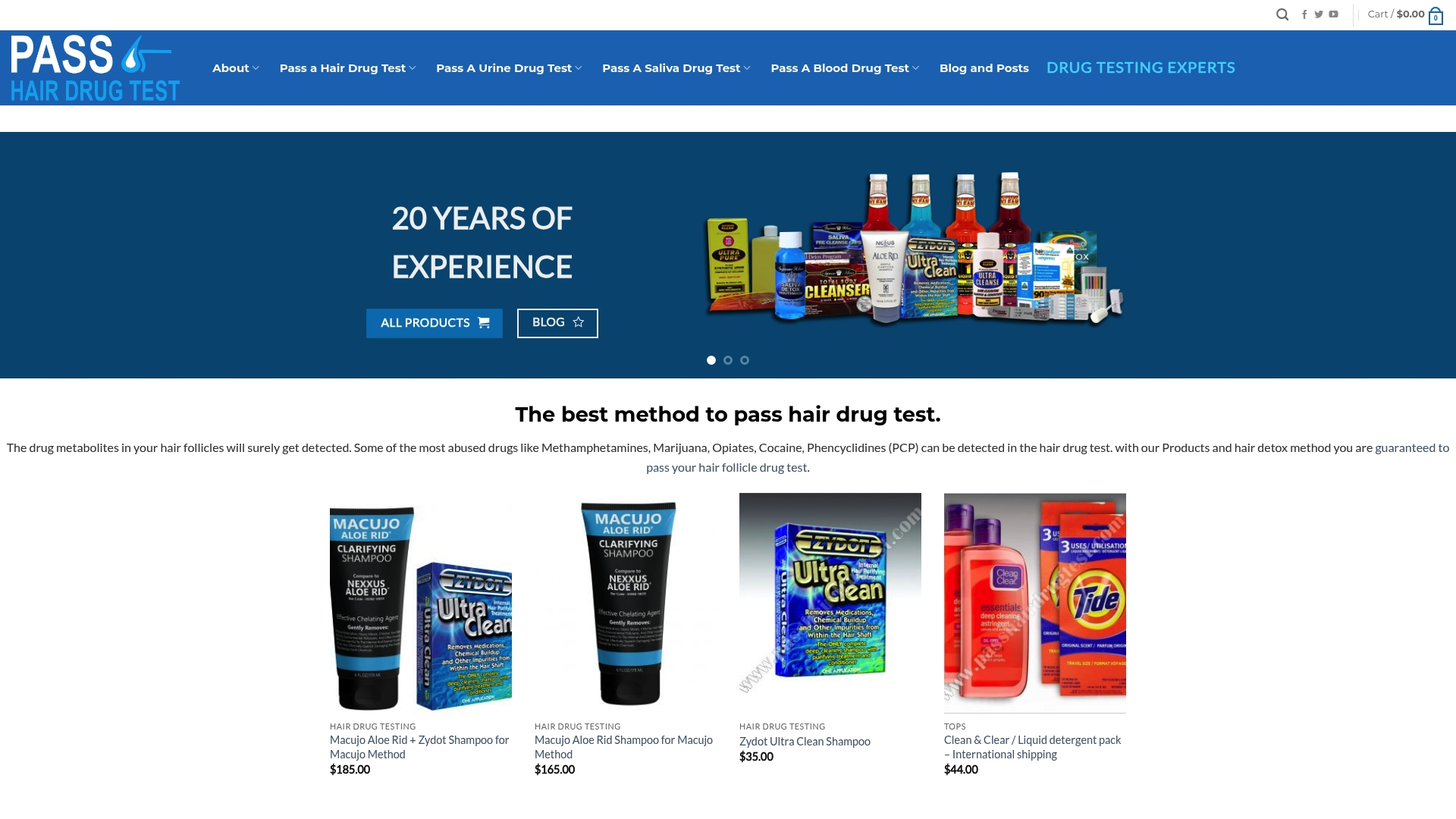
If you want to see how the process works before you order, start with our hair follicle drug testing page or the hair drug test information page.
Perspective
We have spent more than 20 years in this industry, and the most common mistake we see is not doing too little. It is doing too much, too fast, with the wrong things. People read a forum post, grab vinegar, baking soda and whatever clarifying shampoo is in the cabinet, and scrub for a week. Their scalp is irritated and their hair is dry, and they still have no plan.
Our view is simple. A hair test is a defined event, so your preparation should be a defined process. That is why we built our range around Macujo Aloe Rid Shampoo, Zydot Ultra Clean Shampoo and the multi-step Mike’s Macujo Method. Each has directions you can follow and a clear order of steps, so you know what you are doing at every stage.
We also believe you should not do this alone. We offer unlimited phone support because most questions come in the middle of the routine, not before it. Our position is that Mike’s Macujo Method is the most thorough way to approach a hair follicle test, and it is designed for both light and heavy users.
Start early, follow the directions, keep your scalp healthy, and call us if you are unsure.
MIchael
FAQ
Is a hair detox safe for my scalp?
It can be when you use a product made for the purpose and follow its directions. The risk comes from harsh improvised mixtures and from washing too often. Stop any product that itches, burns or stings, and seek medical help for a rash, hives or trouble breathing.
Can regular clarifying shampoo do the same job as a detox shampoo?
Clarifying shampoos are made to remove everyday buildup, and dermatology guidance suggests using them weekly rather than daily. Detox shampoos for hair test preparation are a different category with their own directions. Our detox versus clarifying shampoo guide compares them.
How far ahead should I start?
As early as you can. A longer runway lets you keep a gentle routine, follow directions without doubling up and leave time to ask questions. If your test date is close, call us and we will talk through your options.
Does dyeing or bleaching my hair help?
Lab research shows chemical treatments can change the concentrations measured in hair, but they also damage hair and can irritate skin. If you are considering it, read our page on hair dye and drug tests first, and see a professional rather than experimenting on yourself.
Sources
- CDC: Healthy Habits, Hair and Scalp Hygiene
- DermNet: Shampoos
- Mayo Clinic: Dandruff diagnosis and treatment
- Bertges et al., 2022: Manipulation of THC Hair Concentrations by Commercially Available Products
- Advances in testing for sample manipulation in clinical and forensic toxicology, 2023
- Society of Hair Testing: General Consensus on Hair Testing, 2022
- SAMHSA: Drug Testing Advisory Board open meeting minutes, June 13, 2023
Recommended
- Same Day Hair Detox Before a Hair Drug Test: What Works
- Hair Detox Mistakes Before a Drug Test: 9 to Avoid
- Home Hair Detox: Realistic Protocol and Verification Guide
- Best Hair Detox Shampoo for Hair Follicle Drug Tests
