No products in the cart.
Uncategorized
Last-Minute Hair Test: What You Can Still Do Before It
16
Nov
Nov
If a hair follicle test is days away, the useful move is to cleanse your hair with a proper multi-step routine, not to wait. A hair test reads about 90 days of history, so abstaining now does not clear the sample. A cleansing routine applied to the hair itself is what changes the odds. We built our hair line around that fact: Macujo Aloe Rid Shampoo, Zydot Ultra Clean Shampoo and the multi-step Mike’s Macujo Method, with unlimited phone support on our side.
This guide explains what the lab actually collects, why the timing works the way it does, and how to use the days you have.
Table of Contents
TL;DR
- A standard hair test uses the first 1½ inches of head hair from the scalp, which covers roughly 90 days.
- Use in the last week or so usually has not reached the hair above the scalp yet, so recent use is not the main issue. The older hair is.
- Independent lab research found that everyday shampoos and similar products lowered THC in hair samples by more than half on average, which is why the cleansing step matters.
- Start as early as you can, follow the product instructions exactly, and plan your wash schedule backward from the collection date.
- Our team answers questions by phone, so you can get the routine right before the appointment.
Table of Contents
- What a hair test actually collects
- Why the last week matters less than you think
- What the research says about cleansing the hair
- A realistic last-minute timeline
- How to prepare your hair, step by step
- Why a method beats a single product
- Heavy use, light use, and what it changes
- How long until you know the result
- Get your routine in place
- Our perspective
- FAQ
- Sources
What a hair test actually collects
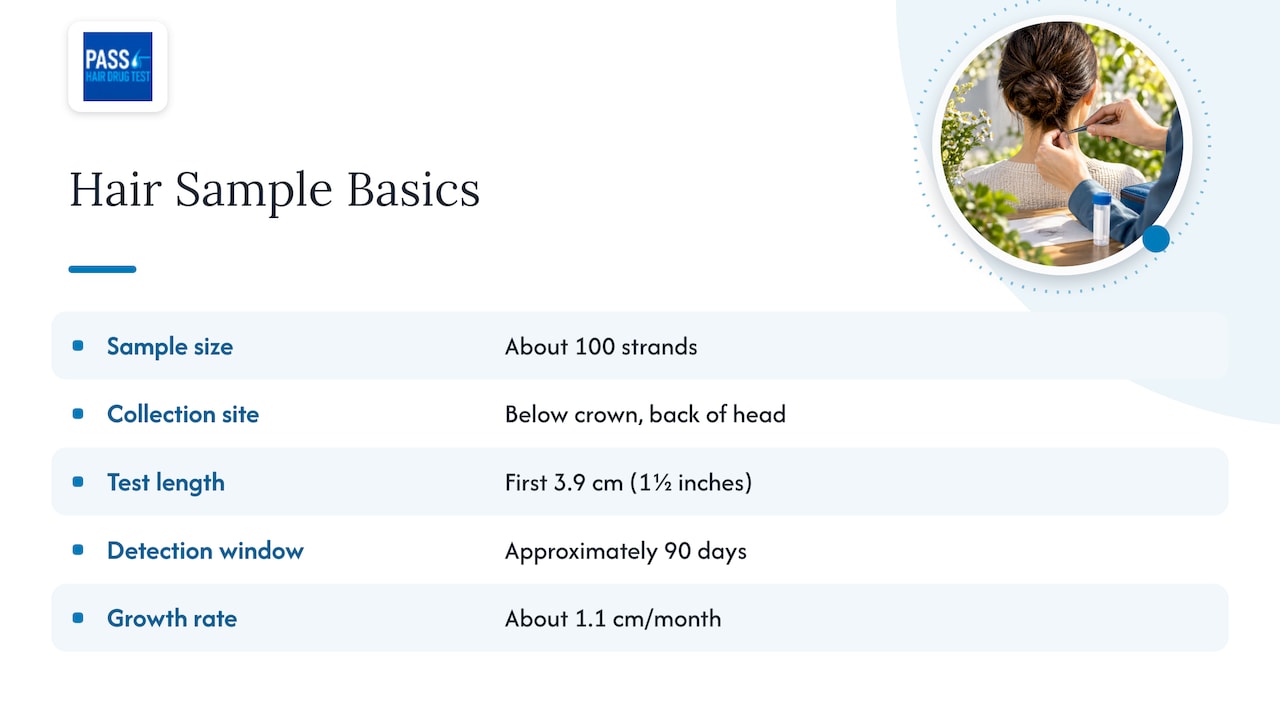
A collector cuts about 100 strands close to the scalp, below the crown near the back of the head. The root end is marked with foil, the sample is sealed and a chain-of-custody form is completed, according to LabCorp’s drug testing summary. The lab first screens with an immunoassay (a quick chemical test) and confirms positive screens with chromatography and mass spectrometry, a more precise method.
The length that gets tested is standard. Quest Diagnostics states the sample is the first 3.9 cm (1½ inches) of head hair from the root, covering approximately a 90-day window. Scalp hair grows about 1.1 cm a month, per the UNODC laboratory manual, which is why an inch and a half lines up with about three months.
The practical takeaway: the lab is looking at the hair nearest your scalp, and that is the hair your preparation has to address.
Why the last week matters less than you think
Most people panic about the most recent days. Hair works differently from urine or saliva. A 2025 review in the Journal of Applied Laboratory Medicine says drugs are not detectable in hair shafts above the scalp for at least a couple of days, and up to 10 days after ingestion. Quest gives a similar figure: it takes about 5 to 10 days for drug-containing hair to grow to the scalp surface where it can be collected.
Two things follow from that:
- Use in the final several days is generally not what a hair test reads. It is built to show a pattern over weeks, which is also why Quest says it is not used for post-accident or reasonable-suspicion testing.
- Stopping now will not remove what is already in the hair. Whatever is in the 1½ inches nearest your scalp stays there until the hair is cut or cleansed. Waiting is not a plan. A cleansing routine is.
If you want the longer version of how THC specifically behaves in hair, our page on THC in hair for U.S. cannabis users goes through it.
What the research says about cleansing the hair
This is the part most last-minute searchers need. A 2022 peer-reviewed German study by Bertges and colleagues treated 54 THC-positive hair samples with commercial products. Mean THC reductions were:
| Product used on the hair | Average THC reduction |
|---|---|
| Vodka | 58% |
| Hair tonic | 63% |
| Zydot shampoo | 52% |
| Disinfectant | 65% |
| Anti-dandruff shampoo | 52% |
In 14 of the 54 samples, treatment brought the concentration below 0.02 ng/mg, the reporting threshold in that study, and no visible traces were left on the hair. A 2024 Italian study in Drug Testing and Analysis (Mestria et al.) also looked at homemade hair treatments and found that treated hair looks the same as untreated hair under visual examination.
Two more findings are worth knowing, because they explain why a hair result is not a simple readout of how much you used:
- A 2015 Scientific Reports study found THC, THCA-A and THC-COOH can show up in hair through sweat, sebum or smoke exposure, not only through use.
- The 2025 JALM review notes hair drug concentration does not correlate with dose or frequency of use, and that hair color can influence how much a hair binds.
In plain terms: what is on and in your hair at the moment of collection is what the lab sees, and that is something a careful cleansing routine addresses directly.
A realistic last-minute timeline
Here is how we would think about the days you have. Adjust it to your collection date, and read the instructions that come with whatever you use.
If you have 7 or more days
You have room to run a full multi-step routine and repeat the wash steps as the instructions call for. This is where Mike’s Macujo Method fits: it is a multi-step process, not a single shampoo, and it is meant to be followed in order. Use the extra days to practice the sequence once so nothing surprises you on the days that count. Our walkthrough on how to use detox shampoo for a hair drug test covers the mechanics.
If you have 3 to 6 days
Order with express shipping if it is offered at checkout, and start the day the product arrives. Do not stretch the routine out over a long period. The goal is to have your most thorough wash close to the collection date, so the hair that gets cut is hair you have just treated.
If you have 1 to 2 days
Prioritize the step-by-step instructions over everything else. Call us before you start if anything is unclear. We offer unlimited phone support, and a quick conversation beats guessing at the sequence the night before. Avoid adding extra products or improvising on top of the instructions.
How to prepare your hair, step by step
Whatever product you choose, these habits apply to a last-minute prep.
- Confirm the test type. Make sure it is a hair follicle test and not urine or saliva. The detection windows and methods differ, and our comparison of hair vs urine testing shows what each one picks up.
- Know your hair situation. Head hair is the standard sample. Quest notes that body hair from alternate sites cannot reliably determine a detection window, so labs prefer head hair when it is available.
- Read the whole instruction sheet first. The sequence, the timing of each wash and the rinse matter more than any single ingredient.
- Wet and wash the full length near the scalp. The lab cuts close to the root, so the roots and the first inch and a half are the area that counts.
- Do not combine routines. Pick one complete method and run it as written. Mixing steps from several sources makes it harder to know what did what.
- Skip bleaching and dyeing as a plan. The Society of Hair Testing’s consensus says cosmetic treatments such as bleaching, dyeing or straightening can change hair compound concentrations, but they also change how your hair looks and feels on collection day. A shampoo-based routine is designed to leave hair looking normal.
- Do a final wash close to the appointment, as the instructions specify, and arrive with clean, product-free hair.
Our article on detox shampoo and hair damage explains what to expect for hair feel and condition during a multi-step routine.
Why a method beats a single product
The Bertges data above shows that a single wash with an ordinary product can lower THC by about half on average. That is a meaningful average, but an average hides spread: some samples dropped far more and some far less. A multi-step method exists to push every strand further, and to do so consistently, so you are not relying on how a single wash happens to land on your hair.
That is the reasoning behind how we built our hair line. Macujo Aloe Rid Shampoo and Zydot Ultra Clean Shampoo are the shampoos, and Mike’s Macujo Method combines multiple steps for people who want the full routine. If you want the evidence on a specific ingredient type, see our page on chelating shampoo and hair drug tests.
Heavy use, light use, and what it changes
Because hair concentration does not track the amount or frequency of use, you cannot reliably judge your own result from how much you used. Many people who used lightly worry too much, and many who used heavily assume the worst. The sensible response for both is the same: run the complete routine, on time, as written. We describe our products as suited to both light and heavy users for exactly that reason, and our phone team can talk through your situation.
If you use concentrates, the question comes up often, and our page on concentrates and hair drug tests covers what labs can detect.
How long until you know the result
After collection, the sample goes to the lab. Quest says hair specimens are typically tested the day they arrive and negative results are typically released within 24 hours. LabCorp gives an average of 48 to 72 hours from lab receipt, with up to 72 more hours when a non-negative result goes to confirmation. Your employer then receives the report, so the total wait can be a few days to about a week.
Get your routine in place
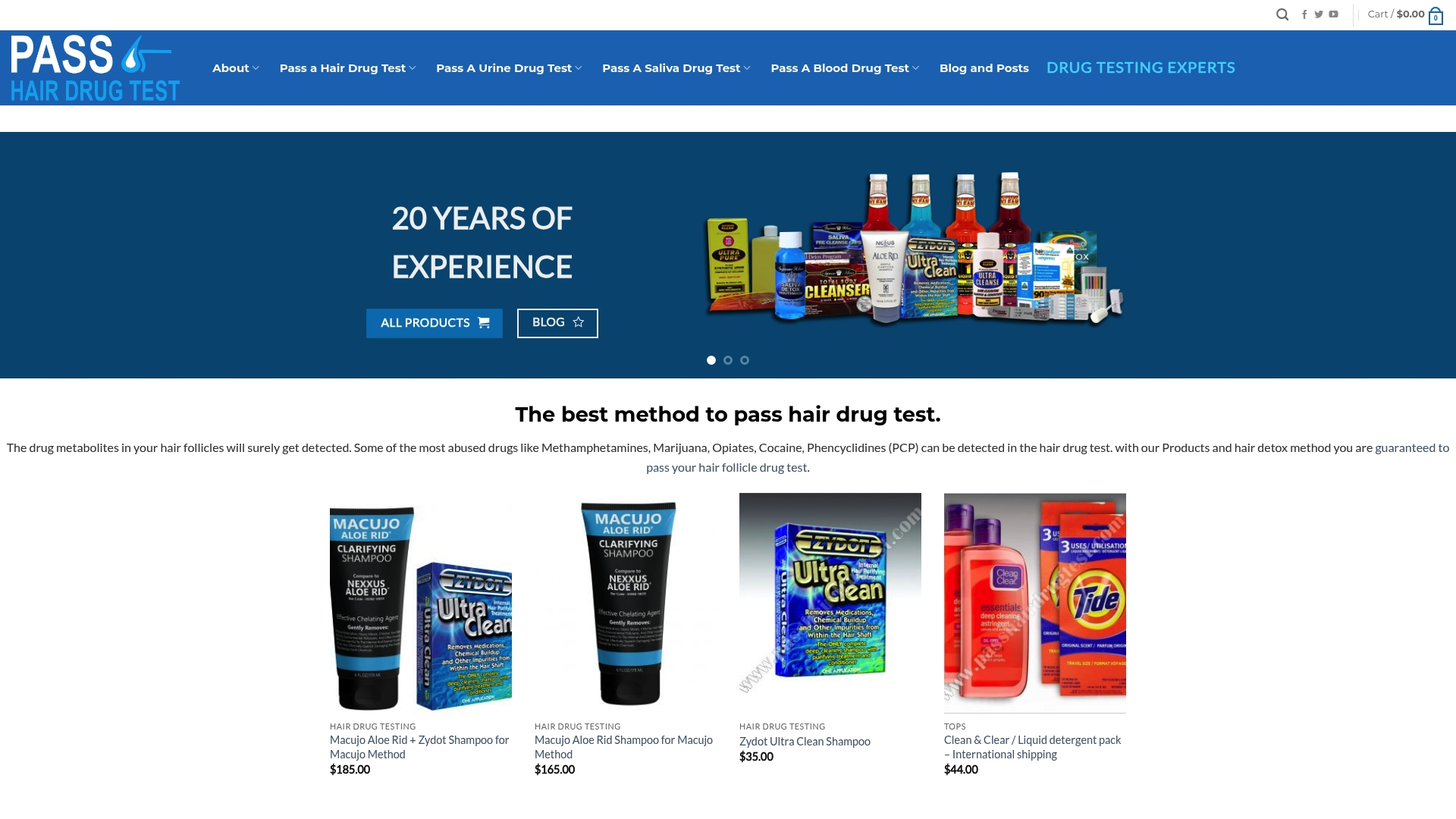
If your collection date is close, the best time to order is today. Our hair cleansing line is on the hair follicle drug testing page, and you can browse the full range, including urine, saliva and blood products, on our products page. Our site describes the routine in detail with instructions and support materials, and our phone support is unlimited if you want to talk it through before you begin.
For a broader overview of how hair tests work, start with our hair drug test information page.
Our perspective
Most people who write to us about a last-minute hair test are in the same spot: a date on the calendar and a feeling that it is too late. It usually is not. The hair test looks backward over about 90 days, and the recent days barely register, so the work is on the hair itself.
We have spent more than 20 years in the drug-testing and detox-product business, and what we keep coming back to is the method. A single wash is a gamble on one pass. Mike’s Macujo Method is a multi-step routine, and we believe in it because it treats the whole 1½ inches of hair nearest your scalp in a defined order.
Our advice is simple: start now, follow the sequence exactly, and call us if you have a question. Unlimited phone support exists so you are never guessing the night before.
MIchael
FAQ
How much does a hair drug test cost?
Prices depend on the provider, the panel and whether a medical review is included, so they vary from one collection site to another. Employer-ordered tests are normally paid for by the employer. If you are ordering a test yourself, check the current price with the lab or collection site before you go.
How long does a hair test take?
Collection takes only a few minutes. Quest says negative results are typically released within 24 hours of testing, and LabCorp gives an average of 48 to 72 hours from lab receipt. Add up to 72 hours if the sample goes to confirmation.
Can one-time THC use show up on a hair test?
Hair is designed to show a pattern over up to 90 days, and drugs take roughly 5 to 10 days to appear in hair above the scalp. Use in the last few days before collection generally has not reached the sample yet.
Can I prepare my hair a day or two before the test?
Yes. Run a complete routine as the instructions specify and finish with a final wash close to the appointment. If you are short on time, call us before starting so you follow the right sequence.
Does the lab only test head hair?
Head hair is the standard sample: the first 1½ inches from the scalp. Body hair is used when head hair is unavailable, but Quest notes it cannot reliably establish a detection window.
Sources
- LabCorp, Drug Testing Options Summary
- Quest Diagnostics, Hair testing FAQ
- UNODC, Guidelines for testing drugs under international control in hair, sweat and oral fluid
- Journal of Applied Laboratory Medicine, Review on Toxicology Testing in Hair (2025)
- Bertges et al., Manipulation of THC Hair Concentrations by Commercially Available Products (2022)
- Mestria et al., Hair analysis: Assessment of homemade hair treatments (Drug Testing and Analysis)
- Moosmann et al., Finding cannabinoids in hair does not prove cannabis consumption (Scientific Reports, 2015)
- Society of Hair Testing, General Consensus on Hair Testing (2022)
Recommended
- Your Last Week Before a Hair Test: What You Can Still Do
- 72, 48, 24 Hours: Last Minute Hair Detox Backed by Research
- Same Day Hair Detox Before a Hair Drug Test: What Works
- Hair Washes Before a Hair Drug Test: What Actually Matters
